

The Annapurna Base Camp (ABC) trek is one of the best-loved walks in the Himalayas. In about a week, you move from subtropical farmland and terraced villages to a glacial amphitheater ringed by peaks above 7,000 meters. You don’t need technical climbing skills. You need reasonable fitness, sensible preparation, and a willingness to walk at a steady pace.
This guide covers what you need to plan the trek: the route, a sample itinerary, the best time to go, permits, costs, packing, and altitude safety.
What Is the Annapurna Base Camp Trek?
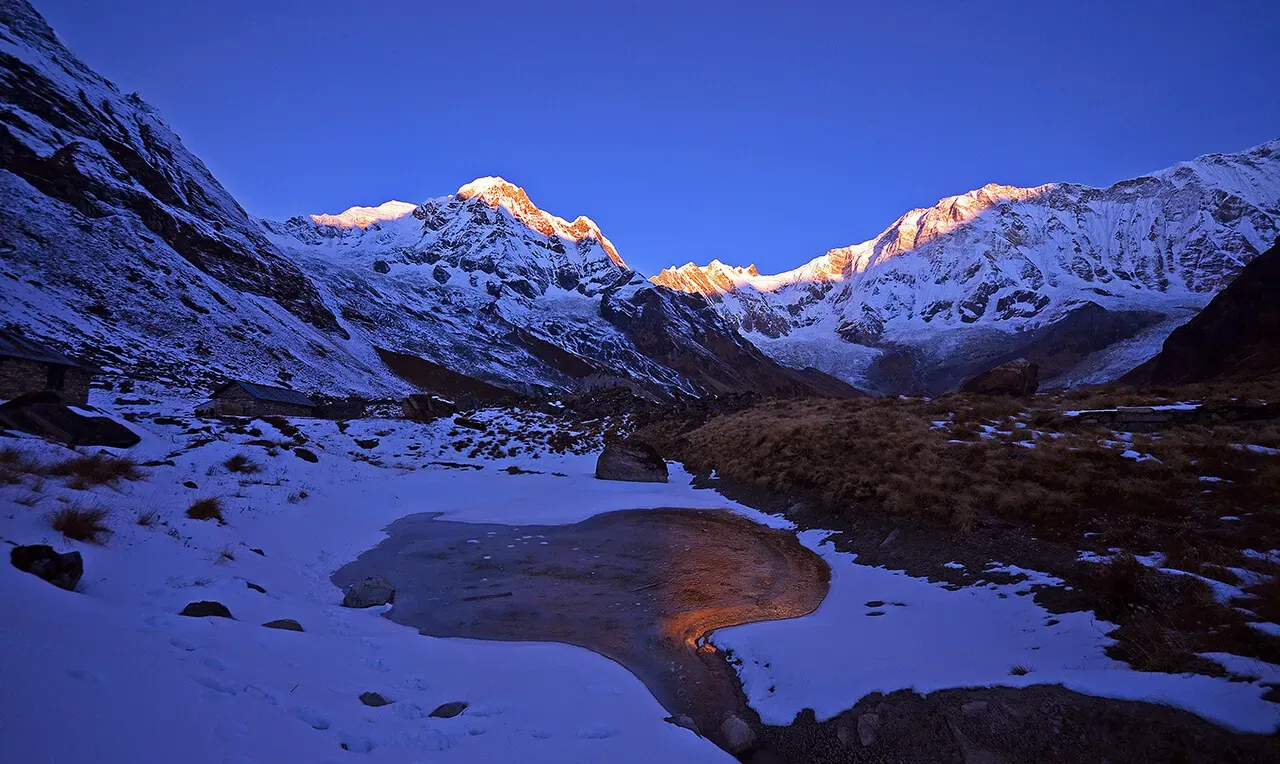
The ABC trek takes you into the Annapurna Sanctuary, a high basin in the Annapurna Conservation Area in north-central Nepal. The trek ends at Annapurna Base Camp at 4,130 meters (13,550 feet), where you are surrounded by Annapurna I (8,091 m), Annapurna South, Hiunchuli, Machhapuchhre (the “Fishtail” peak), and Gangapurna.
Unlike some high-altitude treks, ABC has a well-developed network of teahouses, so you don’t need to carry camping gear. Most trekkers go with a guide or porter, but many walk independently.
Why Trekkers Choose Annapurna Base Camp
Scenery that changes constantly. You start in rhododendron and bamboo forest, pass waterfalls and river gorges, and finish above the tree line among snow and ice. Few treks cover this much variety in so short a time.
Cultural depth. The route passes through Gurung and Magar villages, where stone-paved paths, prayer flags, and local hospitality are part of the walk. Ghandruk and Chhomrong are good places to learn about the region’s traditions.
Manageable duration. Most trekkers complete ABC in 7 to 12 days, which suits people with limited vacation time.
Accessibility. The trailhead is a short drive from Pokhara, which is itself a 25-minute flight or a 6-to-8-hour drive from Kathmandu.
Route Overview
The classic route begins at Nayapul, near Pokhara, and follows the Modi Khola river valley north into the Sanctuary. Key stages include:
-
Nayapul to Tikhedhunga or Ulleri: The trek starts gently along the river, then the climb begins. Ulleri is known for its long stone staircase.
-
Ghorepani and Poon Hill (optional): A popular add-on that gives sunrise views over Dhaulagiri and Annapurna.
-
Chhomrong: A large Gurung village with a stunning view of Annapurna South and Machhapuchhre. It is the last major settlement with good facilities.
-
Sinuwa, Bamboo, and Dovan: You descend and climb through dense forest as the valley narrows.
-
Himalaya and Deurali: The trees thin out and the air cools noticeably.
-
Machhapuchhre Base Camp (MBC) at 3,700 m: A common overnight stop before the final push.
-
Annapurna Base Camp at 4,130 m: The destination, reached by a few hours of walking through open, glaciated terrain.
The return usually retraces part of the route, often with a detour to the hot springs at Jhinu Danda, which are a welcome reward for tired legs.
Sample 10-Day Itinerary
A 10-day schedule allows for comfortable pacing and acclimatization. Adjust it to your own fitness and time.
|
Day |
Route |
Approx. Walking Time |
|
1 |
Pokhara to Nayapul, trek to Tikhedhunga |
4–5 hours |
|
2 |
Tikhedhunga to Ghorepani via Ulleri |
6–7 hours |
|
3 |
Poon Hill sunrise, then trek to Chhomrong |
6–7 hours |
|
4 |
Chhomrong to Dovan |
5–6 hours |
|
5 |
Dovan to Machhapuchhre Base Camp |
5–6 hours |
|
6 |
MBC to ABC, then back to Bamboo or Dovan |
7–8 hours |
|
7 |
Descend to Jhinu Danda and relax in the hot springs |
5–6 hours |
|
8 |
Jhinu Danda to Nayapul, drive to Pokhara |
5–6 hours |
Shorter itineraries of 7 to 8 days exist, but they leave little margin for weather or altitude problems. A few extra days cost little and improve both safety and enjoyment.
Best Time to Trek
Spring (March to May) is one of the two peak seasons. Temperatures are mild, rhododendrons bloom across the lower hills, and mountain views are usually clear, though afternoon haze is common.
Autumn (September to November) is the most reliable season. After the monsoon, the air is crisp and dry, skies are typically clear, and the trails are at their best. This is also the busiest time, so book teahouses and flights early.
Winter (December to February) brings cold nights and heavy snow at higher elevations. The trek is possible for experienced, well-equipped trekkers, but trails can close and some teahouses shut down.
Monsoon (June to August) means heavy rain, leeches at lower elevations, and cloud-covered mountains. Landslides can affect roads and trails. Most people avoid this season.
Permits and Regulations
Trekking in the Annapurna region requires permits. These have included the Annapurna Conservation Area Permit (ACAP) and a trekker registration or local permit. The system and fees have changed in recent years, so check current requirements with a licensed Nepali trekking agency or the Nepal Tourism Board before you travel.
Bring your passport and passport-sized photos, and keep your permits accessible, as they are checked at several points along the trail.
Costs and Budget
The cost of the ABC trek depends on whether you go independently or with an agency.
-
Independent trekker: Teahouse lodging is inexpensive, often a few dollars per night. Meals are the main expense, and prices rise with altitude because supplies are carried up on foot.
-
Guided trek: A licensed guide adds cost, but you gain local knowledge, safety support, and logistics help. Hiring a porter also creates income for local communities.
-
Package trek: Agencies offer all-inclusive packages covering transport, permits, accommodation, meals, and guide services. These are a good option for first-time visitors.
Budget extra for charging devices, hot showers, bottled or treated water, and tips for your guide and porter.
Accommodation and Food
Teahouses along the route provide simple rooms with twin beds, blankets, and shared bathrooms. Rooms are usually cheap if you eat your meals at the same lodge. Dining halls are the social center, often warmed by a stove in the evening.
The classic trekker’s meal is dal bhat, a plate of rice, lentil soup, and vegetable curry, often with free refills. It is filling, nutritious, and cooked fresh. Menus also include noodles, pasta, eggs, pancakes, and porridge. At higher elevations, choices narrow and prices go up.
Altitude Sickness: What You Need to Know
At 4,130 meters, altitude is the main health risk on this trek. Acute Mountain Sickness (AMS) can affect anyone regardless of age or fitness. Early symptoms include headache, nausea, dizziness, and poor sleep.
To reduce your risk:
-
Ascend gradually. Avoid gaining too much sleeping elevation in a single day above 3,000 meters.
-
Stay hydrated. Drink water steadily throughout the day.
-
Avoid alcohol at higher elevations.
-
Listen to your body. Mild symptoms mean you should rest and not climb higher until they pass.
-
Descend if symptoms worsen. Severe headache, confusion, loss of coordination, or breathlessness at rest require immediate descent and medical attention.
Consult a doctor before the trek about altitude medication and travel insurance that covers high-altitude trekking and emergency evacuation.
Packing Essentials
Pack light, because you will carry it, or pay someone else to. Key items include:
-
Footwear: Broken-in, waterproof trekking boots plus camp sandals or light shoes
-
Layers: Moisture-wicking base layers, an insulating fleece or down jacket, and a waterproof shell
-
Sleeping gear: A warm sleeping bag rated for low temperatures (rentals are available in Pokhara)
-
Accessories: Sun hat, warm hat, gloves, sunglasses, and high-SPF sunscreen
-
Gear: Trekking poles, headlamp with spare batteries, and a daypack
-
Health: First aid kit, water purification tablets or filter, and personal medications
-
Extras: Power bank, reusable water bottle, and a dry bag or rain cover
Anything you forget can usually be bought or rented in Pokhara before you start.
Training and Fitness Tips
You don’t need to be an athlete, but you should be comfortable walking for 5 to 7 hours a day for several days in a row. Start preparing 6 to 8 weeks in advance with regular hiking, stair climbing, and cardio. Practice on hills with a loaded daypack, and wear your boots on training walks to prevent blisters.
Responsible Trekking
The Annapurna region depends on careful stewardship. Carry out your waste, avoid single-use plastic where you can, use refill stations or purification tablets, and stay on marked trails. Be respectful in villages: dress modestly, ask before photographing people, and pass prayer walls and stupas on the left.
Conclusion
The Annapurna Base Camp trek rewards you with terraced hillsides, rhododendron forests, warm teahouse evenings, and the moment you walk into the Sanctuary surrounded by some of the world’s greatest mountains. It is demanding but achievable, and it suits both first-time trekkers and experienced hikers.
With good timing, sensible acclimatization, and the right gear, it can be one of the most memorable journeys of your life. Plan carefully, walk at your own pace, and take time to enjoy the view.
