

There is no single view of the Everest region.
One day, you may be walking beside a river under green hills. A few days later, the trees may have almost disappeared, replaced by rocks, glaciers, and towering peaks.
That constant change is one reason the Everest Base Camp Luxury Trek feels so special. It is not simply a walk to a famous point on a map. It is a gradual journey through different landscapes, villages, climates, and ways of life.
For travelers who want to enjoy that journey with more comfort and careful planning, a luxury trekking experience can offer a strong balance between adventure and convenience.
The First Days Feel Different From the Last
The Everest route changes slowly enough that you may not notice it at first.
The lower sections can feel surprisingly green and lively. Birds, trees, rivers, farms, and small settlements surround parts of the trail.
As you climb, those familiar sights slowly disappear.
Watch the Vegetation Fade
At lower elevations, forests provide shade along parts of the trail.
Higher up, the landscape becomes more open. Plants become smaller, trees become rare, and exposed rock takes over.
Eventually, you are walking through a world where the mountains seem to dominate everything around you.
Seeing this change happen step by step gives you a much better understanding of how high you have climbed.
Rivers Are a Constant Companion
The Everest region has powerful rivers fed by mountain snow and glaciers.
You will often hear rushing water while walking through the lower valleys.
Crossing the Famous Bridges
Suspension bridges are part of the classic Everest experience.
Some cross narrow streams, while others stretch above deep valleys. Colorful prayer flags are often tied along them, moving in the mountain wind.
Crossing one can feel exciting, especially the first time.
Take your time and follow the instructions of your guide. There is no reason to hurry across.
Villages Show Another Side of Everest
The mountain communities along the route are an important part of the journey.
Stone houses, small shops, prayer wheels, monasteries, and mountain lodges appear along the trail.
These places are not simply rest stops.
They are homes.
Look Beyond the Tourist View
Take a moment to notice everyday activity.
You may see locals carrying supplies, children walking to school, animals being moved between villages, or people working around their homes.
These simple scenes show what life in the Everest region looks like beyond trekking tourism.
Namche Bazaar Brings Energy to the Trail
After quieter settlements, Namche Bazaar can feel surprisingly busy.
It is one of the most important towns in the Khumbu and a common place for trekkers to spend time adjusting to the altitude.
Use Your Namche Stop Wisely
You do not need to spend the entire day inside your room.
Walk around town. Visit a viewpoint. Explore local shops. Have a meal or warm drink.
The purpose is not to complete another major hike.
It is to stay active while giving your body time to adjust.
Luxury Becomes More Valuable as You Climb
The higher you go, the more basic mountain life can become.
Resources are harder to move. Temperatures drop. Accommodation options become more limited.
This is where the comfort provided by a well-organized Everest Base Camp Luxury Trek can become especially valuable.
Recovery Is Part of the Plan
After several hours of walking, your body needs recovery.
A comfortable place to sleep, a warm meal, and a well-managed evening can help you prepare for the next day.
Luxury cannot change the altitude.
It can, however, make the parts of the trip outside the trail more comfortable.
Learn to Read the Mountain Weather
The Himalayas can look calm one minute and completely different later.
Clouds can move quickly. Wind can become stronger. Temperatures can drop as the sun disappears.
Pack for More Than One Condition
Your clothing should allow you to adapt.
A useful system includes:
- Base layer for warmth and moisture control
- Mid-layer for insulation
- Warm jacket
- Waterproof outer layer
- Gloves
- Hat
- Trekking pants
- Good socks
You may start a walk feeling comfortable and finish it in much colder conditions.
Being prepared is easier than trying to solve a clothing problem halfway up a mountain.
Your Walking Pace Matters
The goal of a trek is not to finish each section as quickly as possible.
A fast pace can leave you exhausted, especially as altitude increases.
Find a Rhythm You Can Maintain
Take smaller steps when climbing.
Keep your breathing steady.
Stop for short breaks when necessary.
Eat and drink throughout the day rather than waiting until you feel completely drained.
A comfortable pace is often more useful than impressive speed.
Do Not Treat Acclimatization as Lost Time
Some travelers become frustrated when an itinerary includes an extra day at the same location.
That mindset misses the point.
Your body needs time to adjust to the thinner air.
Use Rest Days to Explore
An acclimatization day can still be interesting.
You might take a short walk to a nearby viewpoint, explore the village, visit a cultural site, or simply enjoy a slow breakfast.
You are not wasting a day.
You are helping your body prepare for the higher sections ahead.
Base Camp Is Surrounded by a Powerful Landscape
The final approach to Everest Base Camp feels very different from the lower trail.
The scenery becomes much more rugged.
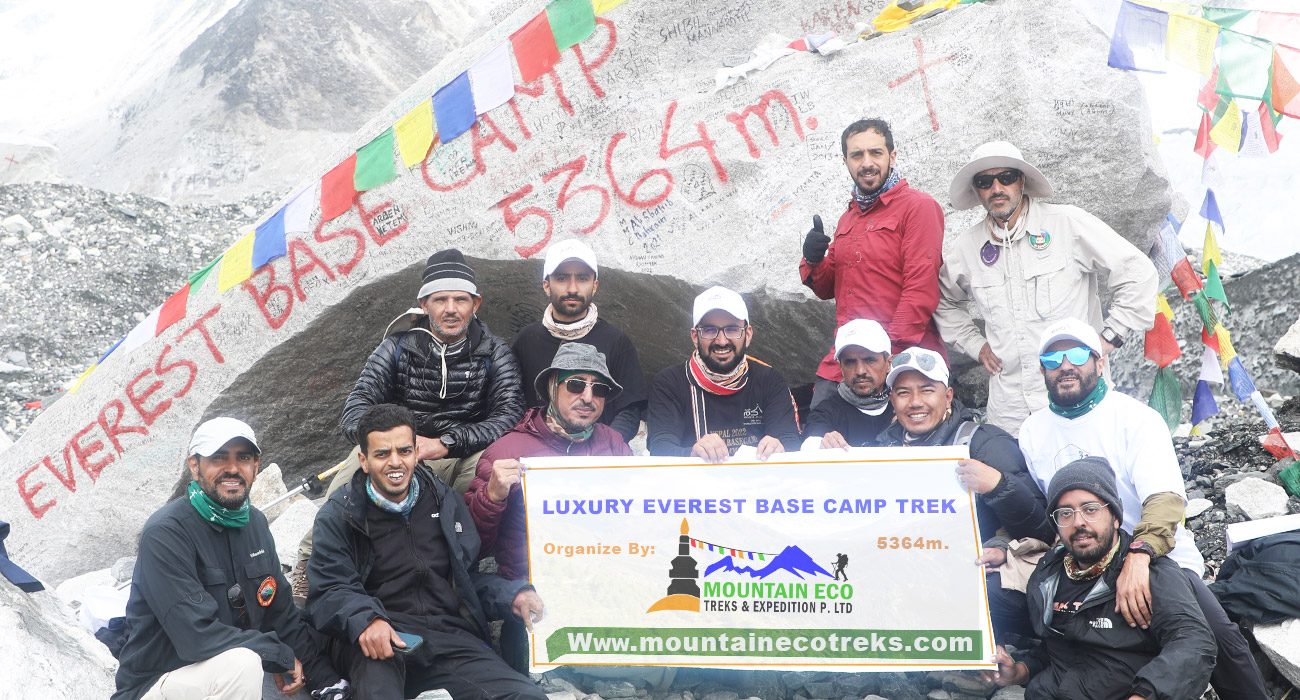
The area around the Khumbu Glacier is filled with rocks, ice, and massive mountain walls.
Take a Moment When You Arrive
Reaching Base Camp can feel almost unreal.
You have spent days walking toward it, and suddenly the goal is directly in front of you.
Take photographs, but also put the camera away for a few minutes.
Look around.
Think about how far you have traveled from the first day.
That quiet moment can be more meaningful than the photograph itself.
What Makes a Luxury Trek Worth Considering?
The Everest Base Camp Luxury Trek is not for travelers whose only goal is to spend as little as possible.
It is designed around a different priority.
You want to experience the Everest region while having greater comfort, support, and organization.
That can mean better accommodation where available, planned transportation, professional guides, suitable meals, and a schedule designed around the realities of high-altitude travel.
Conclusion
The Everest region is constantly changing.
The forests disappear. The air becomes colder. Villages become smaller. Mountains become larger. Eventually, the trail leads you into a landscape of rock, ice, and enormous peaks.
The Everest Base Camp Luxury Trek lets you experience those changes while giving greater attention to comfort and organization.
You still face the real challenge of the Himalayas, but you do not have to add unnecessary stress to it.
If you prepare properly, walk patiently, respect the local communities, and give yourself time to enjoy the route, the journey can become much more than a trip to Base Camp.
It can become a collection of moments you remember long after you return home.
Frequently Asked Questions
Does the landscape change throughout the trek?
Yes. Lower sections include forests and green valleys, while higher areas become rocky, dry, and heavily influenced by glaciers and snow.
Are suspension bridges difficult to cross?
Most trekkers manage them without major problems. They may feel exciting or intimidating at first, but following your guide and walking carefully makes the crossing easier.
Why is Namche important?
Namche is a major settlement in the Khumbu and is commonly used for acclimatization. It also offers shops, viewpoints, and opportunities to experience local mountain life.
What happens if the weather changes?
Mountain weather can affect flights and trekking schedules. Flexibility is important, and your trekking team can adjust plans when conditions require it.
Does a luxury trek reduce the physical challenge?
No. You still need to walk at high altitude. The luxury element mainly improves comfort, organization, accommodation, and support around the trek itself.
